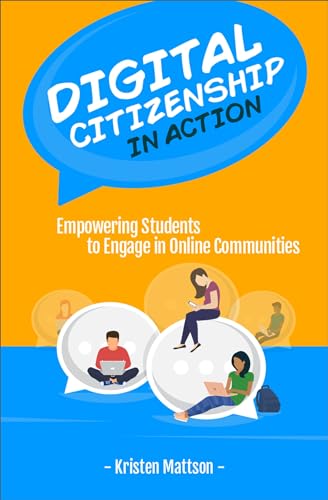
Digital citizenship in action : empowering students to engage in online communities / Kristen Mattson.
Publication details: Portland, Oregon : International Society for Technology in Education, 2017. Edition: First editionDescription: xi, 120 pages ; 22 cmISBN:- 9781564843937 (paperback)
- 9781564846433 (mobi)
- 9781564846457 (pdf)
- HM742 .M375D
| Item type | Current library | Collection | Call number | Status | Date due | Barcode | Item holds |
|---|---|---|---|---|---|---|---|
 หนังสือ
|
PIM Creative Learning Space EEC | หนังสือภาษาอังกฤษ | HM742 .M375D 2017 (Browse shelf(Opens below)) | Available | 32550000505558 |
Collection: หนังสือภาษาอังกฤษ Close shelf browser (Hides shelf browser)


|


|


|

|


|


|


|
||
| HM742 .D375 2015 Critical perspectives on social media and protest: between control and emancipation | HM742 .G868P 2019 Personality Traits in Online Communication : | HM742.K187 2014 Perspectives on Social Media: A Yearbook / | HM742 .M375D 2017 Digital citizenship in action : empowering students to engage in online communities / | HM742 .M618 2016 Social media and public relations: fake friends and powerful publics | HM742 .M726C 2017 Communicating your research with social media : a practical guide to using Blogs, Podcasts, data visualisations and video / | HM742 .T988 2015 Social media marketing |
Includes bibliographical references and index.
Creating space for digital citizenship -- Acknowledging student voice in digital spaces -- Helping students understand their roles in digital communities -- Participating through respectful discourse -- Networking to make meaningful connections -- Making contributions that matter.
"For years, much of the available curricula for teaching digital citizenship focused on "don'ts." Don't share addresses or phone numbers. Don't give out passwords. Don't bully other students. But the conversation then shifted and had many asking, "Why aren't we teaching kids the power of social media?" Next, digital citizenship curriculum moved toward teaching students how to positively brand themselves so that they would stand out when it came to future scholarships and job opportunities. In the end, both messages failed to address one of the most important aspects of citizenship: being in community with others. As citizens, we have a responsibility to give back to the community and to work toward social justice and equity. Digital citizenship curricula should strive to show students possibilities over problems, opportunities over risks and community successes over personal gain. In Digital Citizenship in Action, you'll find practical ways for taking digital citizenship lessons beyond a conversation about personal responsibility so that you can create opportunities for students to become participatory citizens, actively engaging in multiple levels of community and developing relationships based on mutual trust and understanding with others in these spaces"--


There are no comments on this title.